



A website for CHF 500 sounds appealing at first.
For small businesses in particular, it seems sensible to invest as little as possible in their own website. After all, it is relatively straightforward from a technical point of view to create a website these days. Templates, modular systems and AI tools make it possible to get a fully functional website online within a few hours.
But this is precisely where an important difference lies:
A website may work from a technical point of view but still fail to deliver business results.
After all, the key question is not how much it costs to build a website. What matters is the contribution it makes to the business.
A website that fails to attract relevant visitors, does not generate enquiries, does not work well on mobile devices or does not present the company in a professional light may be too expensive, even at CHF 500.
“The cheapest website is not automatically the most cost-effective. What matters is the value it creates for the business.”
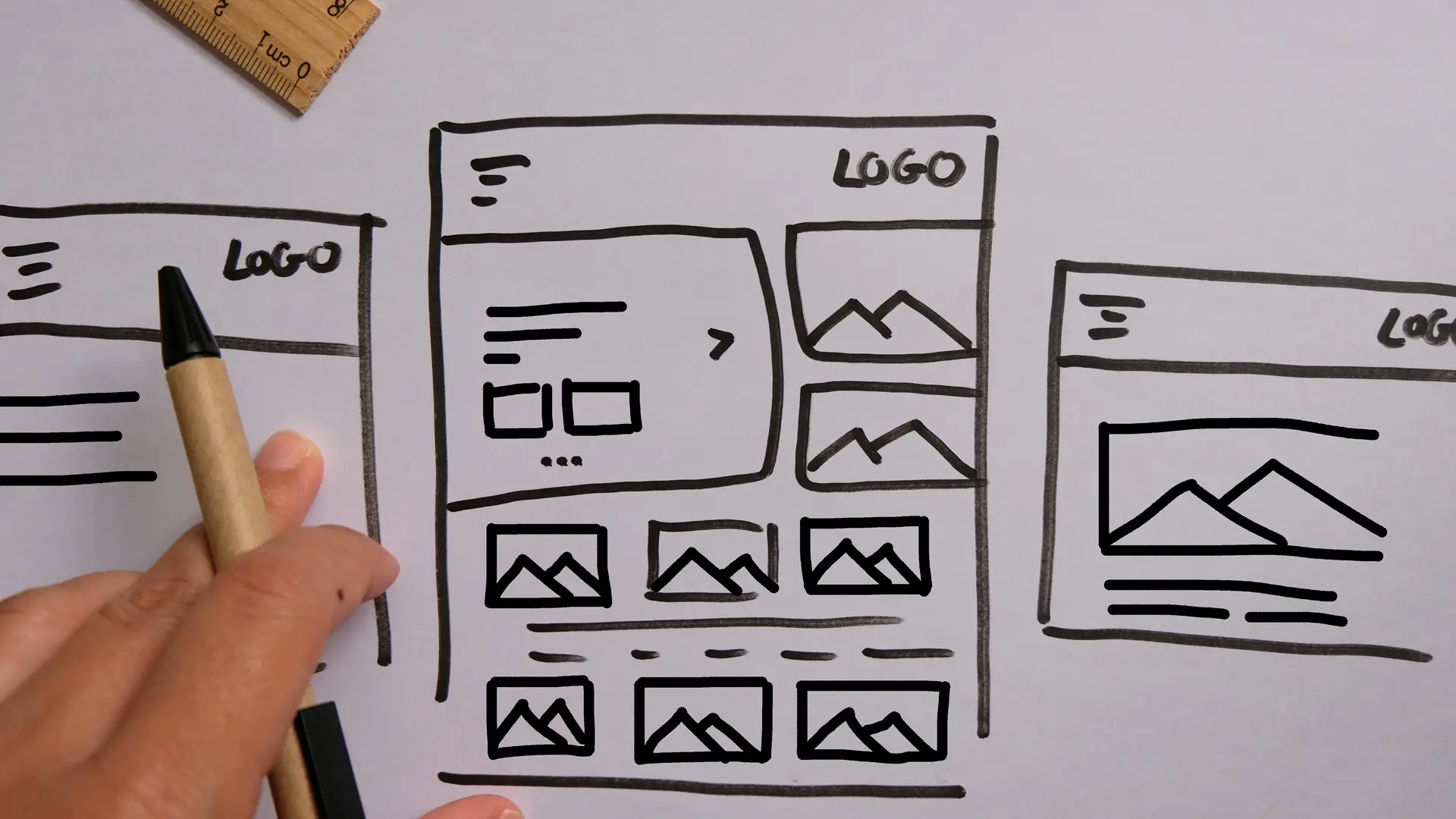
The cheapest price is not automatically the cheapest solution
When it comes to a website, companies often think first of the direct costs.
How much does the design cost?
How much does development cost?
How much does hosting cost?
However, this view does not go far enough.
The actual costs of a website are incurred even if it does not fulfil its purpose.
If a potential customer visits the website and does not understand what the company offers, this creates a problem.
If the website loads slowly and the visitor leaves, it creates a problem.
If a prospective customer is convinced but cannot find an easy way to get in touch, this creates a problem.
And if, after two years, a website has to be completely rebuilt from scratch for technical reasons because the original solution could not be scaled, this incurs further costs.
The cost of a website should therefore always be considered in relation to its business value.
Nowadays, a website is much more than just a digital business card
Just a few years ago, the main purpose of a company website was to provide information.
Address, telephone number, services, About us and perhaps a contact form.
Websites work differently these days.
It is often the first point of contact between a company and a potential customer. Even before a conversation takes place, the website plays a part in determining how professional, relevant and trustworthy a company is perceived to be.
This is particularly crucial in the B2B sector.
A prospective customer may find a company via Google, receive a recommendation, or visit the website via LinkedIn. Before making an enquiry, they often carry out further research on their own.
The website must provide answers right now.
What does this company do?
Who is this offer relevant to?
What problem does it solve?
Why should I trust this provider?
And above all:
Why should I take the next step now?
A website that fails to answer these questions loses potential customers, even though everything works perfectly from a technical point of view.
Design creates the first impression. Strategy determines the outcome.
Professional design is important.
An outdated website can give the impression that the company behind it is no longer keeping up with the times. A modern look and feel, on the other hand, can build trust and support a brand’s positioning.
However, design alone does not generate business results.
A website can be visually impressive and yet still generate very few enquiries.
The reason often lies in a lack of strategic planning.
A successful website doesn’t just have to look good. It must understand its target audience, provide relevant content and guide visitors through a well-structured user journey.
A potential customer shouldn’t have to think about where to click or what the company actually offers.
Good UX reduces friction.
The easier it is for a visitor to understand what is on offer and what their next step should be, the more likely it is that a website visitor will become a lead.
The mobile experience is not a minor detail
Another aspect is often underestimated when it comes to low-cost websites:
Mobile use.
Nowadays, websites aren’t just viewed on large screens. Users access them on their smartphones whilst out and about, between appointments or directly from search results.
A website does not, therefore, simply have to be ‘responsive’.
It really must work on small screens.
Text must be legible. Navigation must be intuitive. Buttons must be easy to access. Forms must not be unnecessarily complicated. Images and animations must not unnecessarily increase loading times.
After all, a visitor does not assess the technical complexity behind a website.
He reflects on his experience.
And this experience has a direct influence on whether he stays or moves on.
Speed is also a business issue
Performance is often regarded as a purely technical issue.
For a business, however, it is also an economic factor.
If a page loads slowly, users are more likely to leave the site. At the same time, technical quality also influences how a business is perceived.
A slow website doesn’t just seem slow.
It can come across as unprofessional.
That is why performance, clean technical implementation and an optimised page structure are just as much a part of a professional website as the visual design.
A website should not contain as many effects as possible.
It should strike the right balance between design, functionality and performance.
SEO doesn’t start after the website has been developed
Another mistake is to only consider SEO after publication.
If a website’s structure has already been finalised, its content has not been optimised for relevant search intent, and the technical foundations are lacking, optimising it at a later stage becomes unnecessarily difficult.
A strategic website takes search engines into account right from the design stage.
What topics is the target audience looking for?What topics is the target audience looking for?
What questions do potential customers ask?
What services are you looking for?
Which pages require original content?
How are these elements logically linked?
SEO does not mean cramming as many keywords as possible onto a page.
It means creating content that responds as effectively as possible to a specific search intent.
For SMEs in particular, a well-designed website can therefore generate a steady stream of relevant visitors in the long term.
A website shouldn’t become a problem after two years
Perhaps the biggest difference between a cheap website and a professionally designed one often only becomes apparent later on.
A company continues to develop.
New services are being introduced. New staff are being recruited. Marketing activities are being expanded. Perhaps a CRM system will be introduced, or a customer portal will be integrated.
If the website was built from the outset solely to reflect the current state of affairs, any changes can become complicated.
A modern website should therefore be able to grow alongside the business.
It should be technically sound and designed in such a way that new features, content and integrations can be added at a later date.
That does not mean that every business needs a highly complex platform.
On the contrary.
The best technical solution is not the most complex one, but the one that suits the company’s actual development.
So what is a website really worth?
A website for CHF 500 might be the right solution.
If a business simply needs a very basic online presence, a streamlined solution may be entirely sufficient.
The problem arises when a company expects the same website to deliver, all at once, greater visibility, more customers, stronger brand awareness, improved processes and long-term scalability.
In that case, the cost of production alone is no longer sufficient as a decision-making criterion.
Instead, the investment should be considered in the context of its potential business impact.
Let’s take a simple example:
A website generates ten qualified enquiries each month, resulting in two new customers.
If the website attracts additional customers through improved positioning, UX, SEO and conversion optimisation, this generates tangible economic value.
The website is not simply a digital version.
It is becoming a sales channel.
And that is precisely why a more expensive website can be better value for money than a cheap website that fails to deliver results.
Not every business needs a website costing CHF 20,000
Professionalism does not automatically mean high costs.
A local business offering just a few services requires a different solution to a company with complex digital processes.
It is therefore not a question of investing as much as possible.
What matters is investing wisely.
The website should be tailored to the business model, the target audience, the positioning and the growth objectives.
A good website is therefore neither the cheapest nor the most expensive solution.
It is the solution that delivers the greatest relevant benefit to the business.
How AM Consulting & Management views websites
At AM Consulting & Management, we therefore do not begin by asking:
“What should the website look like?”
Let’s start with another question:
“What do you want the website to achieve for your business?”
Based on this, we will work together to develop the right strategy.
Positioning and branding must be consistent with the website. Content must reach the target audience. UX must guide the user. Technology must function reliably. SEO must support digital visibility. And the technical architecture should allow for future developments.
This is how a website becomes more than just a digital business card.
It is becoming an integral part of the overall business and digital strategy.
Conclusion
A website for CHF 500 can be good value for money.
A website costing CHF 10,000 can also be good value for money.
And both can end up being too expensive if they don’t serve their purpose.
The true value of a website is not reflected on the invoice.
It is reflected in what she contributes to the company.
Greater trust. Greater visibility. More enquiries. More customers. Better processes. More growth.
That is why the most important question should not be:That is why the most important question should not be:
“How much does the website cost?”
Rather:
“How much will it cost my business if the website isn’t working?”
At AM Consulting & Management, we combine strategy, branding, technology and digital implementation to develop websites that not only look professional, but also make a tangible contribution to a company’s success.
Your website shouldn’t just be online. It should work for your business.